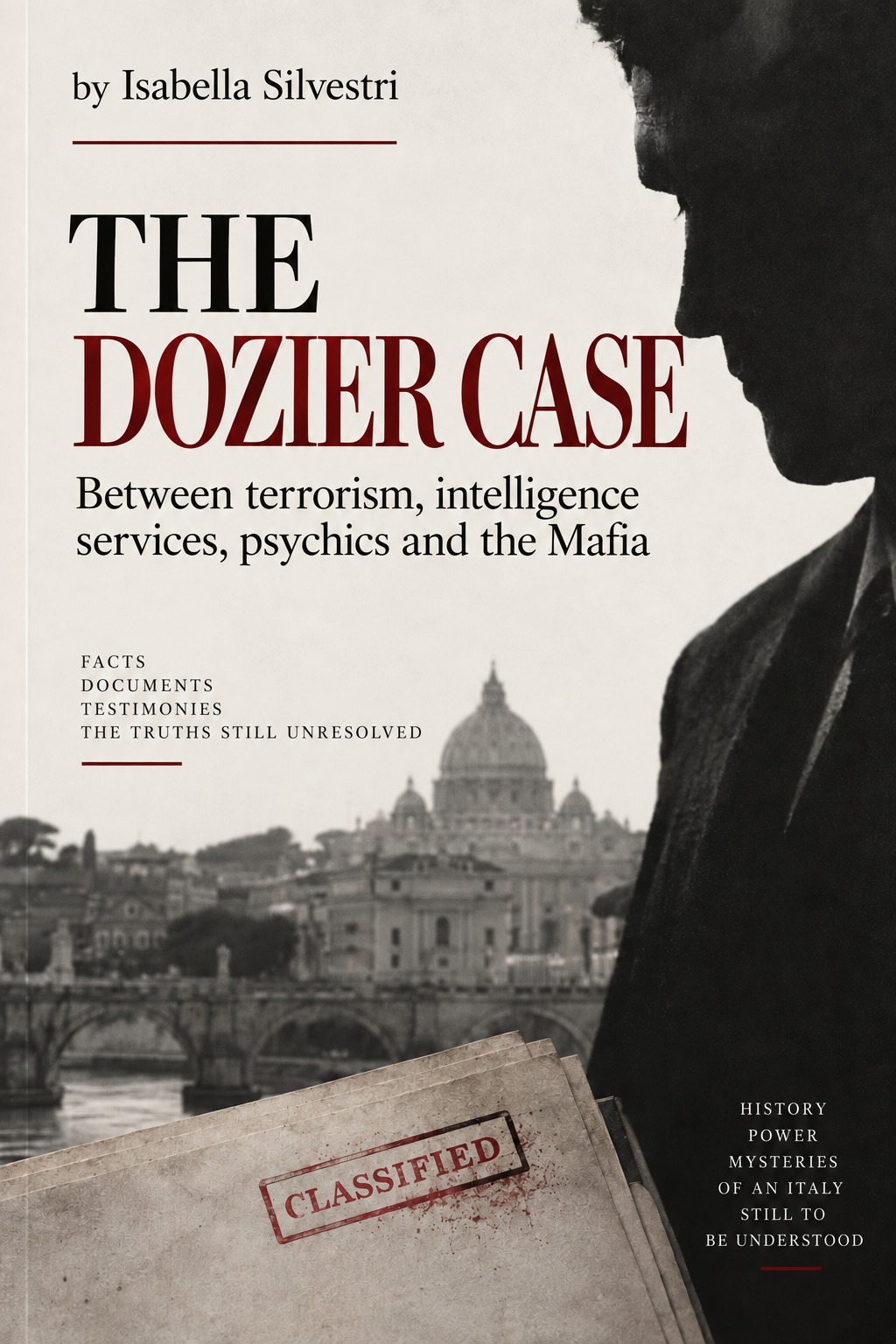
L’edizione in lingua inglese de Il Caso Dozier di Isabella Silvestri è ora disponibile su Amazon.
I lettori possono acquistare il volume completo che esamina il sequestro del generale americano James Lee Dozier ad opera delle Brigate Rosse nel 1981, la risposta investigativa italiana e americana, l’impiego di metodi non convenzionali tra cui il remote viewing, le accuse di tecniche di interrogatorio aggressive e la complessa interazione tra terrorismo, servizi di intelligence e criminalità organizzata durante gli Anni di Piombo.
Il libro si basa in larga misura su documenti declassificati della CIA, atti processuali e resoconti contemporanei per ricostruire uno dei punti di svolta decisivi nel declino del terrorismo di sinistra italiano.
È disponibile in formato digitale sugli store internazionali di Amazon.
The English-language edition of The Dozier Case by Isabella Silvestri is now available on Amazon.
Readers can purchase the complete volume examining the 1981 kidnapping of U.S. General James Lee Dozier by the Red Brigades, the Italian and American investigative response, the use of unconventional methods including remote viewing, allegations of harsh interrogation techniques, and the complex interplay of terrorism, intelligence services and organised crime during Italy’s Years of Lead.
The book draws extensively on declassified CIA documents, court records and contemporary accounts to reconstruct one of the decisive turning points in the decline of Italian left-wing terrorism.
It is available in digital formats through Amazon’s international stores.
The Dozier Case by Isabella Silvestri is a meticulously researched account of one of the most dramatic episodes of Italy’s Years of Lead. On the evening of 17 December 1981, members of the Red Brigades’ Veneto Column, disguised as plumbers, entered the Verona apartment of Brigadier General James Lee Dozier, the highest-ranking American officer at NATO’s Allied Land Forces Southern Europe command. They struck him, forced him into a trunk, and drove him to a first-floor apartment in Padua where he would spend the next forty-two days chained to a cot inside a camping tent. His wife Judith was left bound and gagged; neighbours eventually raised the alarm. The kidnappers issued communiqués denouncing Dozier as a “Yankee pig of the American army of occupation” and announced a “proletarian trial,” yet made no ransom demand. The operation was political, timed to exploit anti-NATO sentiment during the Euro-missile debate and to strike at the heart of the Atlantic Alliance.
What followed was an investigative effort of unprecedented scale. Italian police, Carabinieri, DIGOS and the newly formed NOCS special unit, reinforced by American experts, scoured northern Italy. Declassified CIA memoranda from the days and weeks after the abduction reveal how Washington assessed the risk that the general might be killed after being exploited for propaganda, weighed possible Libyan involvement, and tracked every communiqué and arrest. Remote viewers, including Joe McMoneagle of the military program at Fort Meade, were consulted; one produced sketches pointing to Padua, though official accounts credit conventional detective work and the confession of Ruggero Volinia, obtained under intense and later controversial interrogation, with locating the hideout. On the morning of 28 January 1982 a NOCS team stormed the apartment on Via Pindemonte, freed Dozier unharmed in under ninety seconds, and arrested five Brigades members without firing a shot.
Silvestri places the kidnapping at the centre of a larger story. Drawing on declassified CIA reports from 1981–1983, court records, memoirs and contemporary press, she reconstructs the Red Brigades’ structure, ideology and internal fractures, the Italian state’s institutional reforms and legal innovations that turned cooperating defendants into decisive weapons, and the quiet, still shadowy role allegedly played by elements of the Mafia in the search. Allegations of water-and-salt torture, the first judicial convictions of police officers for mistreatment of left-wing suspects, and the later public identification of the officer known as “Professor De Tormentis” form part of the record she examines without sensationalism. The book also situates the episode within the broader decline of Italian left-wing terrorism: after Dozier the historic columns in Milan, Rome and Naples collapsed under a cascade of arrests, and American analysts concluded that the Brigades, though not yet eradicated, had suffered blows from which they would never fully recover.
Written with the cool precision of an intelligence assessment and the narrative drive of a thriller, The Dozier Case does not claim to close every file. It does, however, assemble the documentary evidence—CIA situation reports, Strategic Resolutions of the Brigades, trial transcripts and the curious 1982 letter confirming the use of psychic techniques—into a coherent picture of a moment when terrorism, state power, unconventional intelligence methods and organised crime briefly intersected on Italian soil. For readers interested in the Cold War periphery, the mechanics of urban guerrilla warfare, or the still unresolved questions surrounding Italy’s Years of Lead, Silvestri’s volume offers both a gripping case study and a sober invitation to further inquiry.